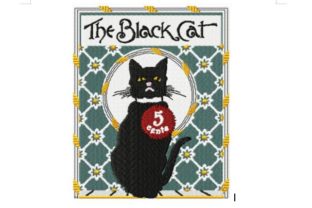
The Black Cat C.May 1896
When I first opened The Black Cat C.May 1896 machine embroidery design, I immediately felt the weight of its origin. Based on a vintage magazine cover from 1896, this design carries a distinct late-nineteenth-century charm that feels both elegant and quietly bold. As someone who prepares products for craft fair booths and handmade market displays, I am always looking for designs that tell a story without needing a single word of explanation. This design does exactly that. The feline silhouette, the period styling, the subtle nod to literary and illustration history — all of it lands with a refined, almost collectible feel. It is not overly cute or cartoonish. It is not rustic or farmhouse in the usual sense. Instead, The Black Cat C.May 1896 sits in a sweet spot between decorative art and premium handmade product. It feels like something a customer would stop to examine, touch, and ultimately buy because it speaks to their taste for the unusual and the beautifully crafted.
A Vintage Mood That Sells at Craft Fairs
The first impression of The Black Cat C.May 1896 is one of understated sophistication. The design draws from a period when magazine covers were illustrated with care, and every line had purpose. For a craft fair product, this means the design does not rely on bright colors or trendy gimmicks to attract attention. Instead, it relies on composition, contrast, and a certain old-world atmosphere. Customers who appreciate gothic, literary, Victorian, or simply well-executed embroidery will be drawn to it. I can already imagine this machine embroidery design on a cream-colored tote bag, sitting among other booths, quietly pulling in shoppers who are tired of mass-produced graphics. The mood is not festive or humorous. It is thoughtful, slightly moody, and deeply appealing to anyone who loves cats and the history of printed illustration.
Where This Design Performs Best in Your Booth
After testing hundreds of embroidery files for real-world production, I can say that The Black Cat C.May 1896 is versatile enough to work across several product categories, but it shines brightest on certain items. Here is how I evaluate it for different handmade products:
- Tote bag design: This is where the design feels most at home. A medium to large hoop size allows the full composition to appear on a canvas or cotton tote. The vintage lines hold up well against the fabric texture, and the design becomes a conversation piece. Customers will pick up the bag, read the year, and ask about the story behind it.
- Apron embroidery: On a solid-colored apron, especially in dark green, navy, or black, the design reads as professional and artistic. It elevates a simple apron into a boutique item suitable for kitchen enthusiasts or gift buyers.
- Tea towel embroidery: This is a tricky product for dense designs, but The Black Cat C.May 1896 works well if the towel has a tight weave and you use a lightweight stabilizer. The vintage feel matches the traditional nature of tea towels perfectly.
- Embroidered patch: If you produce patches for bags or jackets, this design makes an excellent limited-edition patch. The detail is clear enough to read at a small size, but you must test the stitch density first.
- Caps and curved surfaces: I would approach this with caution. The design has a horizontal and vertical balance that may not wrap well around a curved cap front. If you try it, use a smaller version and a firm stabilizer.
- Small fabric pouches and pillow covers: Both are excellent choices. A zippered pouch with this embroidery becomes a giftable item that feels high-end. A throw pillow in a neutral linen fabric with the black cat in the center is an instant booth favorite.
- Market bags and handmade gifts: The design works beautifully on reusable market bags, especially if you use a contrasting thread color. It also makes a strong impression as a limited handmade gift for cat-loving customers.
Practical Selling Points for Etsy and In-Person Booths
When I review a machine embroidery design for commercial use, I think about how it will perform both in the booth and on the listing page. The Black Cat C.May 1896 has several selling points that make it a strong candidate for any small shop product line:
- Instant recognition: The design is easy to understand at a glance. A customer does not need to study it. They see a black cat, a vintage frame, and a date. They immediately know if it is for them.
- Photographs well for online listings: The contrast between the black thread and a light background fabric makes this design pop in photos. For Etsy sellers and printable mockup users, this is a huge advantage. The design reads clearly in thumbnail size and looks even better in close-up shots.
- Repeatable for batch production: Once you stabilize the file and confirm your hoop size, this design is consistent. It does not rely on multiple color changes or complex thread color blending. That makes it practical for producing multiple units for a craft fair or a small shop product run.
- Works as a focal design or accent: Depending on the product, you can use the full design as a centerpiece or reduce it slightly for a smaller accent. This flexibility is valuable when you are testing new products.
Careful-Use Notes Before You Stitch
No design is perfect for every surface, and The Black Cat C.May 1896 has a few considerations that every embroidery business owner should review before production:
- Dense stitch areas: Because the design is based on a vintage magazine cover, some areas may have higher stitch density to achieve the illustrated look. Always stitch a test sample on scrap fabric before stitching on your final product. Check for any puckering or distortion, especially around the cat silhouette and any lettering.
- Small details and tiny lettering: The year 1896 and any thin lines in the illustration may be fragile at very small sizes. If you reduce the design significantly, those details can blur or break. I recommend keeping the design at a size where the lettering remains crisp and readable.
- Thick fabric and textured towels: On thick fabrics like canvas or terry cloth towels, the design may lose some of its fine detail. Use a sharp needle and a cutaway stabilizer to maintain clarity. For tea towel embroidery, test the fabric tension carefully.
- Curved cap surfaces: As mentioned earlier, this design is not naturally suited for caps unless you are willing to test and adjust. The horizontal elements may not curve gracefully on a cap front.
- Dark fabric: If you stitch on dark fabric, the black thread will not show. Consider using a lighter thread color, such as silver, gold, or white, to create contrast. The mood of the design will change with thread color, so test a few options.
- Fabric texture and stabilizer: Always match your stabilizer to the fabric. For this design, a medium-weight cutaway stabilizer is a safe starting point. If you are stitching on a stretchy or loosely woven fabric, use a topper or additional stabilizer to keep the stitches crisp.
Visual Appeal, Customer Attention, and Booth Display
In a crowded craft fair, the products that stop customers are the ones that feel unique and well-made. The Black Cat C.May 1896 contributes to visual appeal through its strong silhouette and balanced composition. The black cat sits at the center of the design, framed by period-appropriate decorative elements. This creates a focal point that draws the eye even from a few feet away. When displayed on a tote bag or pillow cover, the design acts as a centerpiece that elevates the entire product. Customers perceive it as a premium handmade product, not a generic applique.
For booth display strength, I recommend grouping products that feature this design together. Hang a tote bag at eye level, stack a few embroidered pouches on a table, and drape a tea towel over a small rack. The cohesive look signals to buyers that you are a serious maker with a curated collection. The design also works well in printable mockups for Etsy listings, where the vintage aesthetic stands out against modern flat-lay photography backgrounds.
Embroidery Designer Notes for Production
Before you turn The Black Cat C.May 1896 into a finished product for your small shop, follow these practical steps that I use with every new embroidery file:
- Test on scrap fabric first. Use the same fabric type you plan to use for your final product. Check stitch quality, density, and thread tension.
- Check thread contrast. Hold your thread colors against the fabric in natural light. The black cat needs to read clearly against the background. If the fabric is dark, consider a metallic or contrasting thread.
- Review spacing and hoop size. Confirm that the design fits comfortably within your hoop size. Avoid cramming the design to the edge of the hoop, as this can cause shifting.
- Inspect stitch density. If the design feels too dense, consider whether you need to adjust the underlay or use a different stabilizer. Dense designs can cause fabric puckering on lightweight materials.
- Use the right stabilizer. For most applications, a cutaway stabilizer will give you the cleanest results. For towels or high-pile fabrics, use a water-soluble topper.
- Create at least one real mockup. Before you list the product online or bring it to a craft fair, stitch one complete product. Photograph it in natural light. This mockup becomes your best marketing asset.
- Compare fabric colors. Test the design on at least three different fabric colors. You may be surprised which one sells best.
- Confirm commercial licensing. Because this design is based on a vintage magazine cover from 1896, the original artwork is likely in the public domain, but the digital embroidery file itself may have its own license terms. Always check with the digitizer or platform where you purchased the file. Confirm that you are allowed to use the embroidery file for commercial embroidery and selling finished products before you produce inventory.
Final Thoughts on Stitching and Selling
The Black Cat C.May 1896 is not a design for every booth, but it is a design for the right booth. If your customers appreciate cats, vintage illustration, and handmade products with a story, this machine embroidery design will serve you well. It photographs beautifully, stitches cleanly when properly stabilized, and holds its own as a focal design on tote bags, aprons, tea towels, patches, pouches, and pillow covers. As with any digital embroidery file, the final quality depends on your preparation. Test thoroughly, choose your fabric wisely, and let the design speak for itself. At the next craft fair, when a customer picks up that tote bag and asks where you found the artwork, you will know you made the right choice.